
It’s a beautiful day. The sun is shining. Birds are singing. You’re strolling through a park, maybe on your way to a casual brunch or just enjoying a well-deserved ice cream. You feel good. You look good. Your favorite pair of shorts, the ones with just the right amount of “lived-in” comfort, are your trusted companions. You bend over to pet an unusually fluffy dog, or perhaps to pick up a strategically dropped $20 bill.
And then it happens.
Not a sound, exactly. More of a… sensation. A sudden, unexpected draft in a place where drafts are never welcome. A feeling of liberation, immediately followed by a tidal wave of sheer, unadulterated panic. It’s a feeling as old as time itself, or at least as old as denim: the catastrophic, pants-shortening shorts split.
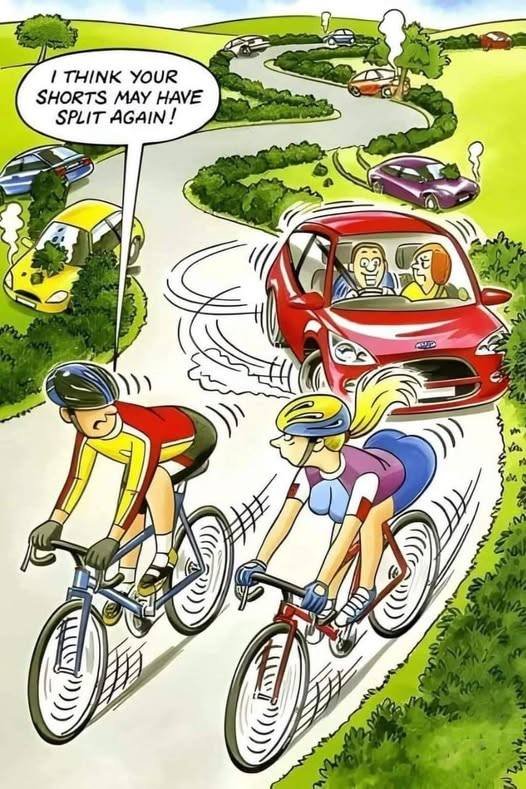
The image above, a timeless masterpiece of suburban comedy, captures the moment perfectly. The friend, the witness, the bearer of bad news: “I THINK YOUR SHORTS MAY HAVE SPLIT AGAIN!” The “again” is the real kicker, isn’t it? This isn’t a maiden voyage failure; this is a recurring, systemic issue.
Friends, we’ve all been there. Or if you haven’t, your day of reckoning is coming. This isn’t just a minor wardrobe malfunction; it’s a full-blown existential crisis played out in public. Let’s dive deep into the anatomy, the aftermath, and the art of surviving The Great Shorts Split.
Part 1: The Anatomy of a Split – A Forensic Investigation
First, we must understand our enemy. The shorts split does not occur at random. It is the culmination of a series of life choices and material failures.
The Culprits: A Rogues’ Gallery of Terrible Shorts
- The Veteran Denims: These are the shorts you’ve had since college. They’ve seen things. They’ve been through multiple moves, questionable laundry cycles, and have a faded hue that can only be described as “memories.” You love them because they are a part of you. Literally. The fabric has molded to your body, but the seams have given up the will to live. The thread is weaker than your resolve to go to the gym on a Monday. One squat too many and it’s goodbye, seams.
- The “They Shrank in the Wash!” Chinos: You bought them a size too small, hoping you’d “grow into them” or that they’d motivate you to lay off the artisanal donuts. They did not. Instead, they have been locked in a silent, tense cold war with your thighs and glutes since day one. The fabric is stretched tighter than a drum. The split here is not a failure; it’s a planned rebellion, a fabric uprising against tyranny.
- The Fast Fashion Imposters: You bought these for $9.99 from a website whose name you can’t pronounce. They looked great in the picture. In person, the material feels like it was woven from dried cobwebs and regret. The stitching is purely decorative. A strong breeze could cause a structural failure. Splitting is not a risk; it’s a guaranteed feature.
The Physics of the Catastrophe
The split almost always occurs at the single most vulnerable point: the crux of the inner thigh, right where the seams meet at the crotch, or vertically up the back seam when you bend over. This isn’t a gentle tear. It’s a violent, sudden rupture. The energy required is a complex formula:
(Weight of Body) x (Angle of Bend) x (Coefficient of Fabric Fatigue) = The Oh-Crap Factor
When the Oh-Crap Factor exceeds the Tensile Strength of the Thread, you have entered the Split Zone.
Part 2: The Event Horizon – What It Actually Feels Like
The moment of the split is a rollercoaster of human emotion compressed into a nanosecond.
- Millisecond 1: The Sensory Alert. Your brain registers a strange sensation. A slight ping. A whisper of a breeze in a region that is normally climate-controlled. Your subconscious is the first to know, sending a vague, “Hey, uh, we’ve got a situation down here,” signal to the main command center.
- Millisecond 2: Denial. “Nah,” you think. “It’s probably just my phone vibrating in my pocket. Or a muscle twitch. It’s definitely not a catastrophic failure of my primary lower-body garment.”
- Millisecond 3: The Dread Confirmation. You subtly shift your weight. The draft becomes more pronounced. It’s no longer a whisper; it’s a declarative sentence. The fabric, once a unified front, now feels like two opposing curtains. The reality crashes down upon you with the force of a thousand suns. It has happened.
- Millisecond 4: The Freeze. Every muscle in your body locks. You are a statue. If you don’t move, maybe the tear won’t be real. Maybe the laws of physics will reverse themselves out of pity. This is the fight-or-flight response choosing a third, less dignified option: “Deer in the headlights.”
Part 3: The Social Fallout – The Witnesses
This is where the image truly comes to life. Your personal disaster is now a public spectacle.
The “Good” Friend (Pictured):
This is the person who delivers the line, “I THINK YOUR SHORTS MAY HAVE SPLIT AGAIN!” with a mixture of concern and barely-contained glee. They are your lifeline, but they are also enjoying this just a little bit. Their tone is crucial. Is it a panicked whisper? Or a loud, theatrical announcement for the benefit of everyone within a 50-yard radius? The “again” is a public service announcement of your history with garment failure. You are grateful for the warning, but you will also never let them forget the slight hint of amusement in their eyes.
The Stranger Who Definitely Saw:
You make eye contact with a stranger across the street. Their eyes dart away a little too quickly. They know. Oh, they know. You have just become a core memory in their life, a funny story they will tell their spouse over dinner. “You’ll never believe what I saw today…” You are now a walking, or rather, a carefully-shuffling, anecdote.
The Unhelpful Child:
The most dangerous witness of all. A small child, blessed with honesty and a complete lack of social filters, will point directly at your nether regions and shout, “MOMMY, WHY IS THAT MAN’S PANTS BROKEN?” There is no recovery from this. There is only the sweet, sweet embrace of the abyss.
Part 4: The Art of the Strategic Retreat – How to Walk Away With Dignity (It’s Impossible, But We Try)
You are split. You are exposed. The mission is no longer about enjoying your day; it’s about getting to a safe zone (your car, your home, a nearby hedge) without making the situation worse. Here are the primary evacuation techniques, ranked by effectiveness.
1. The Penguin Waddle:
This is the most common and instinctive response. You clamp your thighs together, limiting the range of motion in your legs. Your walk becomes a stiff, side-to-side shuffle. Pros: Maximizes coverage. Cons: Makes you look like you’ve just ridden a horse for the first time and are deeply regretting it. Draws a surprising amount of attention.
2. The Backpack/Button-Down Tie:
If you are carrying a backpack or wearing an untucked shirt, you have been blessed with a tactical advantage. The backpack can be worn low, like a defensive shield. The button-down can be tied around your waist, transforming your disaster into a questionable but functional fashion statement. This is the gold standard of split recovery.
3. The “Embrace the Chaos” Power Stride:
This is an advanced maneuver for the truly brave (or foolish). You simply accept your fate and walk normally, the torn fabric flapping in the wind like a battle standard. You make direct, unblinking eye contact with anyone who looks your way. You own the split. This approach is so baffling to onlookers that they will question whether they imagined the whole thing. Not for the faint of heart.
4. The Human Shield:
This is where your “good” friend earns their keep. You position them directly behind you, and you walk in tandem, using them as a moving wall to block the view of the general public. This requires coordination and a friend who is willing to participate in this bizarre reverse-conga-line of shame.
Part 5: Philosophical Musings – What Does It All Mean?
Once you are safe, once you have changed into a secure, split-resistant pair of trousers, the introspection begins. The shorts split is more than a funny story; it is a metaphor for life.
- Vulnerability: It reminds us that no matter how put-together we appear, we are all just one awkward movement away from having it all fall apart. We are fragile beings, held together by thread and hope.
- The Illusion of Control: You can have your life perfectly planned, but you cannot plan for a seam failure. It is a humbling lesson in chaos theory.
- The Importance of Friends: In your darkest hour, when the winds of fate are blowing where they shouldn’t, you find out who your real friends are. The one who tells you, even with a smirk, is a keeper. The one who takes a picture and posts it to Instagram is a foe for life.
- Letting Go: The “again” in the warning is key. It means you’ve been here before. It means you held onto a pair of shorts long past their expiration date. The split is the universe’s way of telling you it’s time to move on, to invest in new garments, and to stop tempting fate.
A Eulogy for the Fallen Garments
So, you take the split shorts in your hands. Do you try to sew them? Is it worth it? The tear is a badge of honor, a story woven into the very fabric. Perhaps you give them a respectful burial in the trash can, thanking them for their service. They were good shorts. They served you well, until the moment they didn’t. They died as they lived: barely holding it together.
The next time you’re getting dressed, remember the Great Split. Give your shorts a gentle stress-test. Do a few squats in the dressing room. Listen to the seams. Are they whispering tales of strength? Or are they murmuring prayers for a quick and painless death?
And to the person in the picture, and to all of us who have lived this nightmare: we salute you. You survived. You waddled on. You learned a valuable lesson about the structural integrity of cheap cotton.
Now go forth, live your life, bend with caution, and may the seams be ever in your favor.